
If there is one thing that makes a Fender Stratocaster instantly recognizable, it is the color. Before you hear a single note, a Strat already tells a story through its finish. I have sold over 300 guitars since 2022, and I can tell you: color matters more than most players think. It affects how fast a guitar sells, how much it is worth, and how attached you get to it.
From Sunburst to a Rainbow: The Timeline
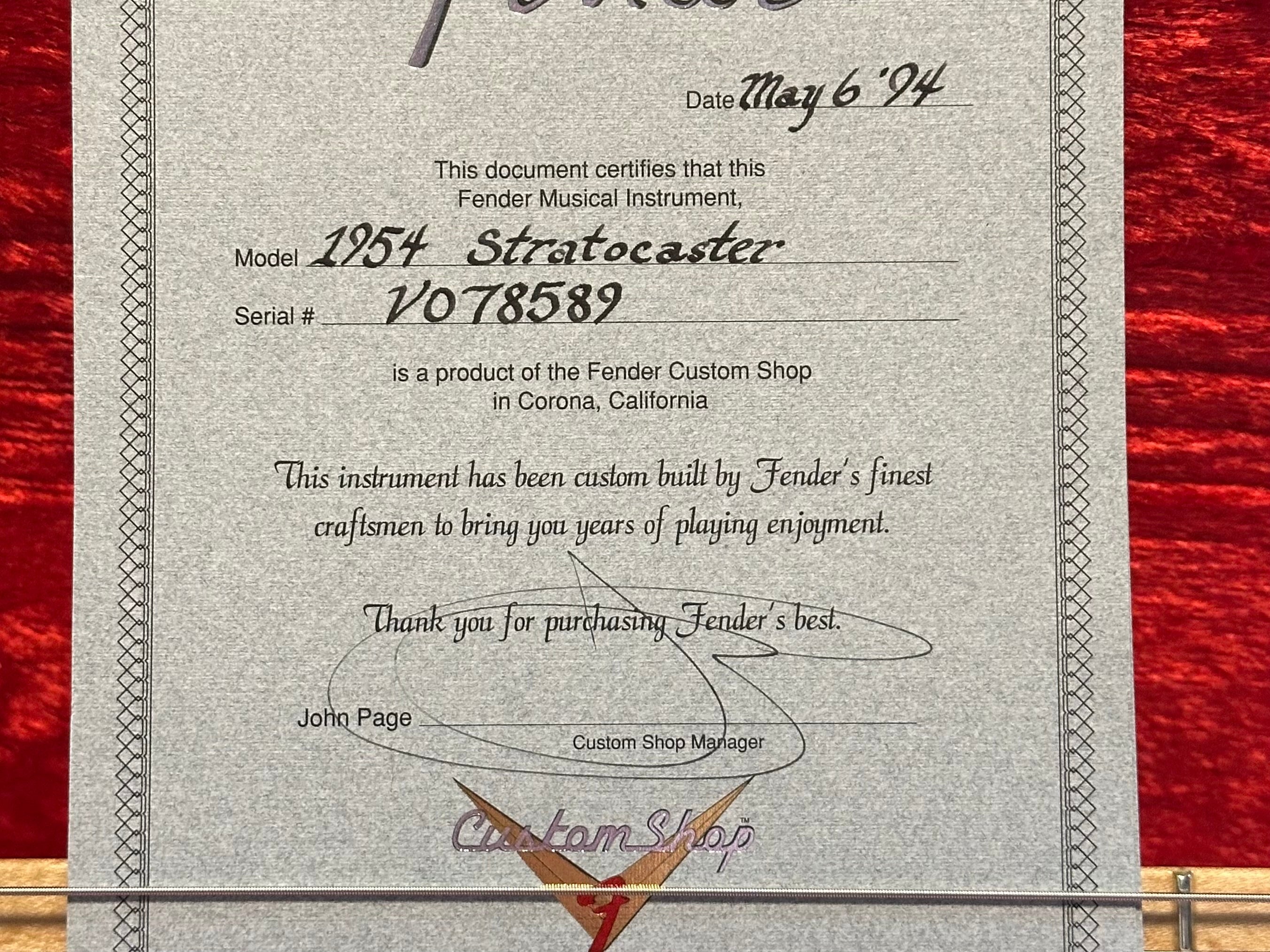
When Leo Fender launched the Stratocaster in 1954, every guitar shipped in a two-tone sunburst on an ash body. No options. The earliest examples had an almost single-tone look, just natural ash with brown edges, with the yellow appearing as the nitro lacquer aged. By mid-1954, Fender was deliberately spraying the yellow center.
In 1956, a Blonde finish became available. By 1957, customers could order DuPont automotive colors for a 5% surcharge, and George Fullerton created the first official custom color: Fiesta Red. In 1958, the sunburst evolved from two-tone to three-tone, adding a red band. Then in 1960, Fender released its first color chart with 14 Custom Colors: Lake Placid Blue, Daphne Blue, Sonic Blue, Shoreline Gold, Olympic White, Burgundy Mist, Black, Sherwood Green, Foam Green, Surf Green, Inca Silver, Fiesta Red, Dakota Red, and Shell Pink. All borrowed from the American car industry.
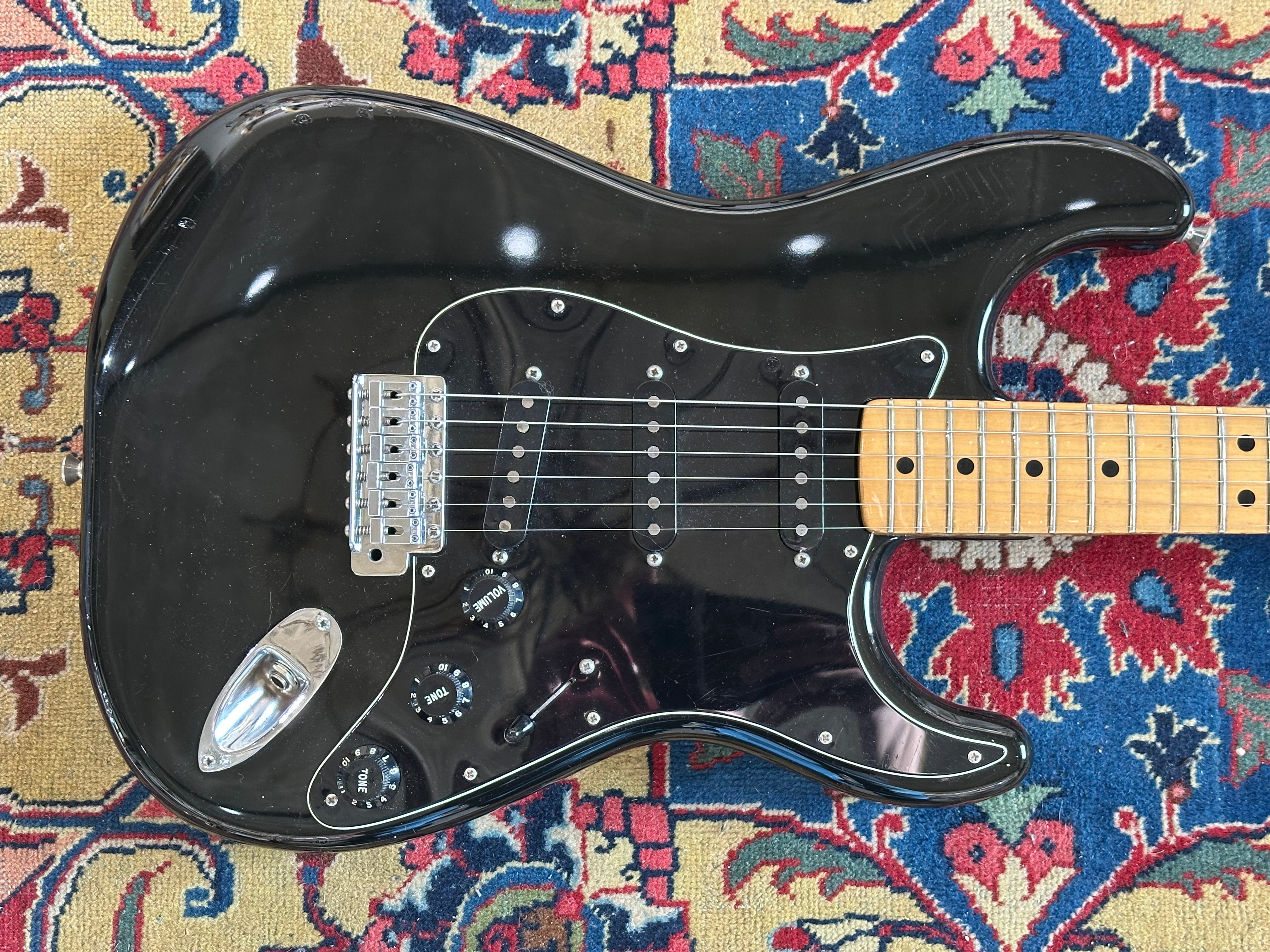
In 1963, Shell Pink was replaced by Candy Apple Red, the only custom color Fender developed in-house. After CBS bought Fender in 1965, the palette gradually shrank to just six finishes by 1974. It took until the 1980s for color variety to return.

Famous Players and Their Colors
Buddy Holly put the sunburst Strat on the map with his Ed Sullivan Show appearance in 1957. Across the Atlantic, Hank Marvin received what is widely considered the UK's first Stratocaster in 1959: a Fiesta Red with gold hardware, ordered by Cliff Richard. That guitar inspired David Gilmour, Mark Knopfler, and Jeff Beck to pick up the Strat.
Jimi Hendrix's Olympic White "Izabella" became the most famous guitar in rock after Woodstock 1969. Eric Clapton's "Blackie," assembled from 1950s parts, was his main Strat from 1974 to 1985. Gilmour's Black Strat sold for nearly $4 million in 2019. Rory Gallagher's beaten-up 1961 sunburst became a symbol of raw blues honesty. Stevie Ray Vaughan's "Number One" was a sunburst with a left-handed tremolo. And Nile Rodgers crafted disco and funk history with his sunburst "Hitmaker." Sunburst has always been the people's choice.
The Strat That Will Never Leave Me
My keeper is a '64 LTD Edition in Sonic Blue. I love the color, it is understated and has just the right amount of vintage cool. But honestly, Sonic Blue is not my number one. That belongs to Daphne Blue. So the '64 comes close to perfection, but there is still room for improvement.
I am a sucker for rare and special colors. Every time something unusual comes in, a Seafoam Green or a Sherwood Green, I get that feeling. And I am still keeping an eye out for a Graffiti Yellow Strat. It is a Custom Shop color that you just do not see often, and when one pops up, it disappears fast. If you spot one before I do, let me know.
Whether you are drawn to a timeless sunburst or hunting for something rare, the color of your Strat is part of your story. Want to find yours? Come visit the showroom in Buren, or send me a message on WhatsApp. I always have 40 to 50 guitars waiting for you.